Moving Heavy Items on Ham Common: Legal Limits
Posted on 30/07/2026

Moving a wardrobe, piano, American-style fridge, or a sofa that seems to have been made from concrete is rarely just a matter of muscle. On Ham Common, it can also raise questions about access, parking, pavements, neighbours, and what is sensible to move by hand at all. If you are trying to work out the legal limits for moving heavy items on Ham Common, the real answer is not one neat number. It depends on public safety, property access, lifting risk, local conditions, and whether you are crossing shared spaces or using a vehicle near restricted streets.
This guide breaks the topic down in plain English. You will see where the legal and practical boundaries usually sit, what can go wrong, and how to plan a move without drifting into avoidable trouble. And, to be fair, that is often the difference between a calm move and a day of sweating, swearing, and awkwardly trying to turn a wardrobe in a hallway that clearly was not designed for it.
Why Moving Heavy Items on Ham Common: Legal Limits Matters
Heavy-item moves are not only about strength. They involve a duty to avoid injury, damage, obstruction, and unsafe handling. On Ham Common, that matters because many moves involve tight residential access, shared walkways, narrow turns, older properties, and parked vehicles that reduce clearance. A bulky item that looks manageable on paper can become a hazard the moment it meets a stairwell, a doorstep, or a sloping path.
The legal side usually shows up in a few familiar ways: safe manual handling, obstruction of public land, vehicle access, parking compliance, and avoiding damage to property or communal areas. If a lift is too heavy, too awkward, or too risky, then the sensible limit is reached before any formal number is. That can feel frustrating, but it is also the point where good judgement protects everyone.
There is also a reputational side. If you are moving in a shared block or on a busier local road, one careless lift can annoy neighbours, block pedestrians, or trigger complaints. Nobody wants their move remembered as the day the landing was blocked by a mattress that would not bend, honestly.
How Moving Heavy Items on Ham Common: Legal Limits Works
There is no single rule that says, "you may lift X kilograms on Ham Common and no more." In practice, the limit comes from several overlapping factors:
- Manual handling safety: whether the item can be moved without excessive strain, twisting, or loss of control.
- Access conditions: stairs, steps, tight hallways, narrow entrances, low ceilings, and awkward corners.
- Public space impact: whether the item, trolley, or vehicle blocks footpaths, roads, or shared access points.
- Vehicle legality: parking, stopping, loading, and any local restrictions that apply to the street.
- Property protection: avoiding damage to walls, bannisters, floors, glass, and doors.
In the real world, a move becomes "not suitable" when one of those factors tips the balance. A heavy item may be technically liftable by two people, but not safely liftable down a staircase with a sharp turn and a slick floor. That is where using the right equipment or getting professional help becomes the lawful and sensible route.
If the move is in a flat, the same logic applies more strongly. Communal stairs, limited turning space, and shared entrances make mistakes more likely. If you are planning a smaller flat move, the advice in Ham Common flats smallmove strategies is a useful companion read because it shows how access changes the whole picture.
Key Benefits and Practical Advantages
Getting the legal and practical limits right is not just about avoiding trouble. It makes the whole move cleaner, faster, and less stressful.
- Reduced injury risk: the biggest benefit, by a mile.
- Less damage: to walls, flooring, doors, and the item itself.
- Better timing: fewer pauses, fewer do-overs, fewer "hang on, let us try the other end."
- Lower neighbour friction: quieter, tidier, and less disruptive loading.
- More predictable costs: you avoid last-minute fixes or emergency help.
- Cleaner compliance: especially where parking or access matters.
There is also a practical bonus that people sometimes miss: good planning lets you use the right route, the right vehicle size, and the right number of people. That matters when you are trying to move a heavy sofa at 8:15 in the morning while traffic is starting to build and the front path is already damp. Small detail, big difference.
For items like beds, mattresses, and large frames, a structured approach helps far more than brute force. If that is on your list, the ultimate checklist for moving beds and mattresses is worth using before you touch a bolt or strap.
Who This Is For and When It Makes Sense
This topic matters to a few groups in particular:
- Homeowners moving large furniture out of a house or into storage.
- Flat movers dealing with stairwells, lifts, or shared entrances.
- Students and renters with less time, fewer hands, and more awkward belongings than expected.
- Home offices moving desks, filing cabinets, printers, and boxed equipment.
- Anyone with specialist items like pianos, freezers, gym equipment, or oversized wardrobes.
It also makes sense for people who are simply trying to decide whether to do the move themselves or call in help. Truth be told, that decision is often made too late, after the item is already half-way to the doorway and everyone has realised it weighs far more than they wanted to admit.
If your move involves fragile or valuable items, it is wise to think beyond lifting strength alone. A piano, for instance, is a classic example of something that seems moveable until you account for balance, floor loading, and the risks to the mechanism. That is why the hidden challenges of piano moving is so relevant in a heavy-item discussion.
Step-by-Step Guidance
1. Identify the heaviest and most awkward items first
Start with the pieces that are most likely to create a problem: wardrobes, sofas, solid wood tables, pianos, exercise equipment, and white goods. Weight matters, but awkward shape often matters more. A light-but-bulky item can be harder to move than a denser one.
2. Measure routes, not just items
Measure door widths, stair landings, turns, ceiling height, and the distance from the property to the vehicle. Many issues appear in the route, not the room. If you have ever watched an item get stuck at a hallway corner, you will know exactly what I mean.
3. Check whether the item can be dismantled
Break down what you can: bed frames, table legs, removable shelves, cabinet doors, and appliance parts where appropriate. Dismantling often turns a borderline lift into a much safer one. Just keep all screws and fittings in clearly labelled bags. That sounds obvious. People still lose them.
4. Plan the loading point
Decide where the item will be placed before it comes outside. Avoid leaving it on a pavement while you "just fetch the van around." If the route is tight, use a trolley, sliders, or blankets to reduce dragging and scrapes.
5. Assign roles before lifting
Who opens doors? Who guides the rear? Who watches corners? A calm lift needs clear jobs. Two people moving in silence and guessing each other's next step is a recipe for wobble.
6. Stop if the lift becomes unsafe
If the item shifts badly, blocks sight lines, or starts forcing someone into a twisted position, stop. Reset. Get more help. There is no prize for forcing a bad lift through to the end.
7. Use professional support when the limit is reached
Some items are better left to trained movers with the correct equipment and experience. If you are unsure, it is often cheaper and safer to ask before the move than to repair a smashed bannister afterwards.
Expert Tips for Better Results
Here is the short version: aim to make the item lighter, the route simpler, and the lift shorter. That trio solves more problems than people expect.
- Remove loose parts early: cushions, drawers, shelves, lids, and detachable feet.
- Protect the surfaces: blankets, corner guards, and floor runners reduce damage and help movement.
- Use controlled communication: one person leads, the other follows the rhythm.
- Do a dry run: walk the route empty before lifting anything.
- Keep grip points clear: no floppy packaging, tape tails, or loose straps where hands need to go.
- Think about weather: wet paving and mud make everything more slippery, especially on a grey London morning.
One useful habit is to prepare the home before the item is moved. Clear clutter, box small loose items, and make room near the exit. The article on decluttering before moving to new digs is helpful here because a simpler space nearly always equals a safer lift.
Another sensible move is to improve the packing before the heavy day arrives. Packing hacks to simplify your move can reduce the number of things competing for space in the hallway, which is often the real problem on the day.
Common Mistakes to Avoid
The same few errors show up again and again. Some are small. Some are not small at all.
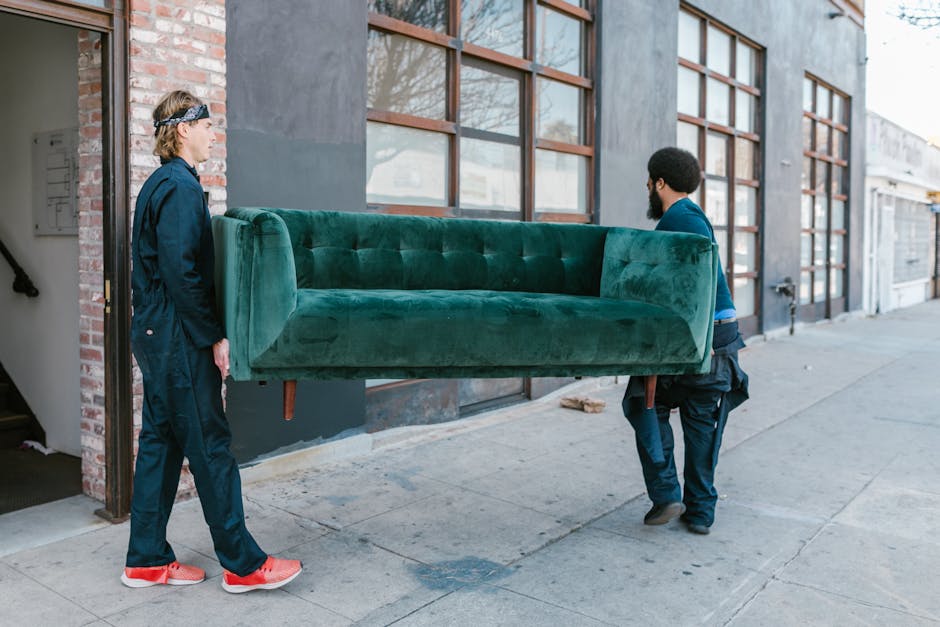
- Underestimating awkward shapes: a sofa with a deep frame can be worse than a heavier box.
- Forgetting the final turn: a straight hallway can still hide a tricky corner.
- Using the wrong footwear: slippery soles are not your friend.
- Dragging instead of lifting: this damages floors and often ruins control.
- Trying to rush the last 10%: the injury usually happens when people are tired and impatient.
- Not checking parking and access early: if the van cannot get close, the lift gets harder very fast.
There is also a specific mistake around "self-reliant" lifting. People assume that because they can lift an object once, they can move it safely through an entire property. Not really. Repeated lifts, turns, and holds are what create the strain. If you want a realistic view of that side of the job, see self-reliant heavy lifting for a practical breakdown.
Tools, Resources and Recommendations
You do not need a warehouse of kit, but a few well-chosen tools can change the whole job.
| Tool or resource | Best for | Why it helps |
|---|---|---|
| Furniture blankets | Large wooden items, appliances, polished surfaces | Reduces scratches and helps with sliding |
| Heavy-duty gloves | Grip and hand protection | Improves control and comfort |
| Furniture sliders | Short indoor moves on suitable flooring | Makes repositioning safer and easier |
| Straps and trolleys | Bulkier or denser items | Spreads weight and supports movement |
| Packing materials | Loose parts, fragile surfaces, drawers, fittings | Keeps everything together and protected |
For broader move planning, it also helps to look at the full service mix. Our services overview gives a useful sense of how moving support can be matched to the size and difficulty of the job. If you are comparing transport options, choosing the right van size for Ham moves is another smart companion piece because overfilling a vehicle is one of those mistakes that looks minor until loading begins.
If your situation involves storage, staging, or a delayed delivery, the guidance on storage options in Ham can also help you avoid forcing everything into one exhausting day.
Law, Compliance, Standards, or Best Practice
For heavy-item moves, the most relevant legal and compliance considerations in the UK are usually practical rather than dramatic. You are generally thinking about manual handling duties, safe working methods, public obstruction, traffic and parking rules, and general property care. The exact obligations will vary with the setting, but the principle stays the same: do not expose people to unnecessary risk.
In plain terms, that means:
- do not attempt a lift that is clearly beyond the abilities of the people present;
- do not block a pavement, entrance, or road space longer than necessary;
- do not damage shared property while moving through common areas;
- do not leave heavy items unsecured where they can tip, fall, or roll;
- do not ignore local parking or stopping restrictions.
For a local move, these issues become even more relevant where access is tight or parking is controlled. If you are moving around Ham and nearby streets, a good point of reference is Richmond Council rules for Ham TW10 removals, which can help you think through the parking and access side before moving day.
Similarly, if your move may require temporary roadside loading or a skip for clearance work, it is wise to understand when a permit may be needed. The page on skip permits in Ham is useful for planning waste and clearance without creating a headache later.
Best practice is simple: if the item is heavy enough that you are asking whether there is a legal limit, you should already be planning for safer handling rather than hoping muscle will solve everything. That is not alarmist. It is just sensible.
Options, Methods, or Comparison Table
There are usually three realistic ways to move heavy items: do it yourself, use a mixed approach, or bring in professional help. Each has a place.
| Method | Best for | Pros | Limitations |
|---|---|---|---|
| DIY move | Smaller heavy items, clear access, short distances | Cheaper, flexible, fast if well planned | Higher physical risk, more chance of damage |
| Mixed approach | Medium-heavy items with some tricky access | Balances cost and support, often practical | Needs coordination and enough capable helpers |
| Professional removal | Pianos, very large furniture, awkward stair access, fragile or valuable items | Safer, more controlled, less stressful | Costs more than doing it yourself |
For many Ham Common moves, the mixed approach is the sweet spot. You handle the packing, clearing, and lighter bits, then get help for the items that are genuinely awkward. If you are moving a sofa, the article on preserving your couch for long-term safety also offers useful ideas for protecting upholstery before and after the move.
And if your move feels more like a whole-house event than a single-item job, a calm and stress-free move is a good mindset and planning reference. Not glamorous, perhaps, but very handy.

Case Study or Real-World Example
Picture a typical Ham Common move: a two-person household needs to take a heavy dining table and a large sofa out of a first-floor property. The front path is narrow, the hallway has a sharp corner, and the van cannot be parked directly outside for long. On paper, the items are not outrageously heavy. In practice, the route makes them borderline.
The first mistake would be to carry on without measuring anything. The second would be to assume the dining table can stay assembled. In the better version of the move, the team removes the legs, wraps the top, clears the corridor, and checks the outside route before lifting. The sofa is tilted carefully, not dragged, and one person guides at the turn while the other maintains balance from the rear.
That sort of move often looks uneventful from the street. Inside, it is a series of small decisions. Which is exactly as it should be. If it looked dramatic, something would probably be going wrong.
For this type of local access challenge, the article on navigating narrow access on Ham riverside moves is a useful read because the same principles often apply: route planning, vehicle positioning, and not being optimistic about the width of that last doorway.
Practical Checklist
Use this checklist before moving any heavy item on Ham Common:
- Measure the item and the route through the property.
- Check whether it can be dismantled safely.
- Clear floors, steps, and turning points.
- Confirm who is lifting, guiding, and opening doors.
- Prepare blankets, straps, gloves, and a trolley if needed.
- Check parking, access, and the distance from the van to the door.
- Protect corners, bannisters, and flooring.
- Confirm the item is empty, unplugged, or disconnected where relevant.
- Take breaks if the lift is repeated or awkward.
- Stop if balance, grip, or visibility becomes unsafe.
If your move includes boxes, small fittings, or mixed loads, make sure the smaller items are packed first so they do not get in the way of the larger lift. The practical advice in packing and boxes in Ham can help make the whole route safer and neater.
Also, if time is tight and you are dealing with a short-notice move, the page on last-minute removals in Ham may help you think clearly under pressure. Moving fast and moving safely are not the same thing, as you probably already know.
Get a free quote today and see how much you can save.
Conclusion
The legal limits for moving heavy items on Ham Common are really about safe judgement, access, and responsibility. There may not be a neat weight threshold written on a wall, but there is a very real line between a controlled move and an unsafe one. Once you cross into awkward stairs, poor access, public obstruction, or a load that is too hard to handle cleanly, the right answer is to slow down and adjust the plan.
With careful measuring, the right tools, and a realistic view of what you can safely lift, most heavy-item moves become much more manageable. And if the item is specialist, bulky, or just plain stubborn, getting experienced help is not overkill. It is often the smartest move in the room.
Take your time, keep the route clear, and remember that a good move is one where everyone still feels fine at the end of it. That is the real win.